


A market can have a standout winner without becoming an easier place to invest. The November 18 figures put that distinction on display, with Lighter moving ahead as several larger tokens retreated.
In this article, we look at the Bitcoin market trends behind that uneven session, the limits of a daily leaderboard and what traders need to check before drawing conclusions.
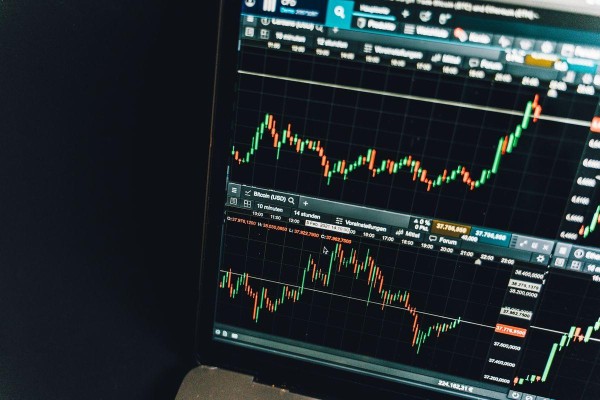
Figure 1: A cryptocurrency trading chart displayed on a screen. Credit: Alesia Kozik / Pexels.
Bitcoin’s Decline Leaves the Wider Recovery Unsettled
The snapshot was taken at 3:00 am Korean Standard Time on 18 November 2026. For Australian east-coast readers, that was 5:00 am AEDT. These are recorded prices, not live quotes or end-of-day closes.
Bitcoin was below USD 64,000, while Ethereum had fallen below USD 1,800. Solana went the other way. That split matters because a general statement that “crypto rose” or “crypto fell” can conceal very different experiences for individual holders.
Round price levels make convenient reference points. Crossing one does not establish where the next buyer will appear, or how far selling might continue. A brief move back above it would also need context: did the price hold, and did other assets recover with it?
The November 18 Snapshot Shows How Far Returns Diverged
| Cryptocurrency | Price (USD) | 24-Hour Change |
| Bitcoin (BTC) | 63,832.44 | −1.66% |
| Ethereum (ETH) | 1,787.10 | −2.02% |
| Solana (SOL) | 72.42 | +1.47% |
| Lighter (LIT) | Not supplied | +7.86% |
| Internet Computer (ICP) | Not supplied | −10.14% |
Changes cover the preceding 24 hours at the stated snapshot time. Lighter and Internet Computer are included as the top-100 group’s strongest and weakest performers. Their dollar prices were not supplied in the reference report.
Lighter’s Daily Lead Does Not Establish a Monthly Winner
The Lighter crypto price move was the clearest exception to the weakness among several large tokens. Yet the percentage alone leaves important questions unanswered. It does not identify who bought, how much trading supported the rise or whether buyers were responding to a project announcement.
Nor does it tell a reader how someone who bought at the start of November has fared. That requires a starting price and an ending price covering the same period. Mixing a 24-hour gain with a monthly headline would overstate what this snapshot proves.
There is also a difference between leading a group and leading the entire market. Here, the comparison covers the top 100 cryptocurrencies by market capitalisation. Smaller tokens outside that group could have moved further in either direction.
A Rising Token Still Needs Buyers at the Quoted Price
For a trader, the next question is practical: could an order actually be filled near the price on the screen? The last completed trade and the price available for a new order need not match.
An order book shows offers to buy and sell. When little volume is available near the quoted price, a larger market order can pass through several price levels. That affects what a buyer pays and what a seller receives.
Blockore’s guide to how crypto exchanges work explains the trading process and the fees involved. Those details become especially relevant when a sharp percentage gain attracts attention to a token.
This is a general trading consideration, not a finding that Lighter lacked liquidity during the reported session. The snapshot does not contain enough order-book information to make that judgement.
Altcoin Strength Needs More Than One Green Leaderboard Entry
Altcoin market trends are easier to assess when the same group of assets is followed over several periods. One strong day can be a rebound from an earlier fall. It can also be followed by selling before a new investor has had time to reassess.
The checks worth making are straightforward:
- Match the clock: Compare daily returns recorded at the same time, rather than figures refreshed at different moments.
- Count participation: Look at how many assets are rising, not just the largest percentage gain.
- Check trading conditions: Review volume, the bid–ask spread and available orders before treating a quoted price as executable.
- Separate price from explanation: Confirm any claimed catalyst through a project announcement rather than assuming the gain proves it.
These checks would not predict the next session. They would help distinguish a widely shared improvement from a handful of moves that make the market appear stronger than it is.
The Next Test Is Whether the Gains Spread and Last
For Blockore readers, the useful follow-up is whether Lighter retains its relative strength while Bitcoin stabilises, and whether more large altcoins join the recovery. Neither outcome is established by this daily snapshot.
A rising token offers evidence that buyers were willing to pay more during that period. It offers much less certainty about their willingness to keep buying tomorrow. November’s contrasting moves are a reason to examine individual positions carefully, rather than apply one market-wide verdict.
Also Read: Bitcoin Slides to US$76,000 as an AI Stock Rout Drags Crypto Lower
FAQs
Was Lighter November’s Best-Performing Cryptocurrency?
The figures establish a daily lead among the top 100 cryptocurrencies at the snapshot time. They do not establish a month-to-date ranking.
Why Can an Altcoin Rise When Bitcoin Falls?
Each token has its own buyers and sellers. Project news, positioning and trading conditions can produce different returns, although this report does not establish a specific cause for Lighter’s gain.
Does a Daily Gain Show That a Token Is Undervalued?
No. It shows a price change over a defined period. Assessing value requires separate work on the token’s role, supply, demand and risks.
Are These Prices Available to Trade Now?
Not necessarily. They are historical snapshot figures. Exchange quotes, trading fees and available liquidity may have changed.
Disclaimer: This article provides general market information, not personal financial advice or a recommendation to trade. Prices reflect a dated snapshot and may differ across exchanges. Cryptocurrency investments can lose substantial value, and a short-term gain does not establish future returns.

Diana Alexandra is an experienced editor and content strategist with over a decade of expertise across publishing, digital media, and quality assurance. Holding an MA in English and specialised credentials in journalism and editorial practice, she transforms complex ideas and raw drafts into sharp, SEO-driven, and reader-focused copy that meets rigorous publication standards.