


Across Australia, energy developers and mine operators turn quarries and extraction sites into solar farms, battery hubs, and wildlife reserves. Crews regrade spoil heaps to mount rows of panels, while ecologists scatter tree seed around pit perimeters to rebuild bushland corridors. Through this work, land that once yielded coal and gold now generates electricity and shelters flora and fauna.
Two projects in the Hunter Valley and Far North Queensland show how rapidly this movement gathers pace. At Muswellbrook in New South Wales, OX2 Australia builds a solar and battery station right across the footprint of a coal mine. Up at Kidston in Queensland, Genex Power runs a solar array alongside a hydro storage plant that sits inside a gold mine pit.
- Researchers at Global Energy Monitor calculate capacity for 73 gigawatts of solar power across Australia’s coal mines after closure.
- Engineers wire panels and battery banks directly into substations and 132-kilovolt transmission lines that already serve mine operations.
- Conservation crews contour mine slopes, seal shafts, and sow bushland alongside power infrastructure to establish reserves.
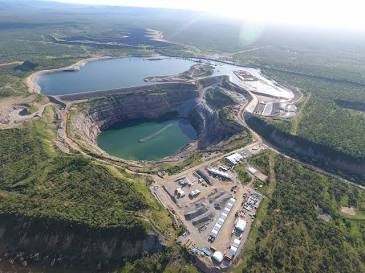
Kidston Clean Energy Hub, Far North Queensland [Source: Northern Australia Infrastructure Facility]
Why This Transition Matters
Families and business owners across Australia count on grid stability as coal stations reach the end of service. Placing solar arrays on quarries and mine footprints spares forests and grazing paddocks from bulldozers while shaving months off build schedules. In country towns, residents also welcome paycheques and trade apprenticeships as energy construction steps in behind resource extraction.
Land rehabilitation tackles hazards that linger long after draglines and haul trucks leave a site. Crews curb dust plumes, stabilise pit walls, and remediate tailings dams, turning excavation footprints into walking trails, water reservoirs, and wildlife sanctuaries. Ratepayers and taxpayers share in the savings because builders reuse access roads, switchyards, and grid corridors instead of funding infrastructure from scratch.
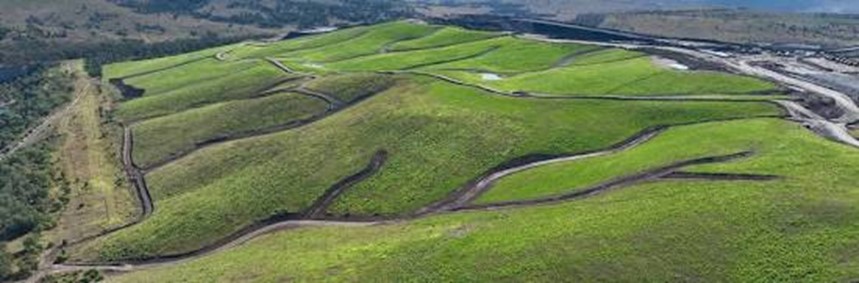
Contoured and revegetated mine slopes in the Hunter Valley show how land rehabilitation reduces dust and restores landforms. [Source: BHP]
- Queensland holds room for 52 gigawatts of mine-site solar generation, while New South Wales adds capacity for 14 gigawatts.
- Tapping into transmission corridors already in place cuts connection queues and trims capital expenditure for power suppliers.
- Rebuilding soil layers and creeks slows runoff, stops erosion, and safeguards catchments for farmers and towns downstream.
Key Players Driving the Change
Mining houses, energy developers, equipment makers, and state regulators pool expertise across the resources and electricity sectors to pull off these site conversions. In the Hunter Valley, OX2 Australia leads the Muswellbrook Solar Farm and Battery alongside landholder Idemitsu Australia, which manages rehabilitation across the Muswellbrook Clean Industries Precinct. On the ground, Bouygues Construction Australia and Equans Solar & Storage handle engineering and assembly.
Equipment suppliers LONGi and Canadian Solar subsidiary e-STORAGE deliver solar modules and battery units for the Muswellbrook build. “Projects such as Muswellbrook, which strategically combine solar generation with large-scale battery storage, are essential for stabilising the grid, managing peak demand, and replacing retiring coal capacity across Australia,” LONGi stated. Up in Queensland, Genex Power teams up with builders McConnell Dowell and John Holland, turbine maker ANDRITZ, and the Northern Australia Infrastructure Facility to run the Kidston hub.
- Genex Power Managing Director Simon Kidston steers the Kidston Clean Energy Hub with engineering advisers Mott MacDonald and GHD.
- “It’s exciting to do something that’s never been attempted before in Australia or on this scale anywhere in the world,” Kidston said.
- Planning bodies such as the New South Wales Independent Planning Commission and EnergyCo oversee consent conditions and grid integration.
- Ecologists, geologists, and landholders track water quality and revegetation across roughly 80,000 mines and quarries nationwide.
Ground Zero: Key Sites Across Australia
Activity concentrates across coal basins, goldfields, and quarry belts stretching through New South Wales, Queensland, South Australia, and Western Australia. In the Upper Hunter Valley, crews build the Muswellbrook Solar Farm and Battery across the Muswellbrook Coal Mine footprint. The site borders substations and freight corridors that carried coal trains for generations.
Roughly 270 kilometres north-west of Townsville in Far North Queensland, Genex Power operates the Kidston Clean Energy Hub across two voids from gold extraction. To the south, land managers and regulators remediate over 1,000 gold workings across South Australia, reaching through the Flinders Ranges, Adelaide Hills, and Barossa Goldfields. Across Western Australia, restoration teams also rehabilitate quarries and iron ore workings so revegetation programmes shield heritage sites and desert ecosystems.
- Muswellbrook covers parcels north and south of Muscle Creek Road and Sandy Creek Road in the Hunter Valley.
- Kidston links two mine pits at two levels of elevation with water from Copperfield Dam and a 186-kilometre power line to Mount Fox.
- Teams in South Australia transform mine workings near Blinman into heritage trails and wildlife corridors.
Project Timeline & Milestones
Turning mine footprints into energy and conservation hubs spans a decade of milestones from 2017 through 2028. Genex Power switched on its 50-megawatt solar array at Kidston in 2017, then commissioned its 250-megawatt hydro storage station in 2025. Those stages gave engineers across Australia a blueprint for pairing sunlight capture with water storage inside mine voids.
Also Read: Why Bitcoin Is Losing Ground as Selling Pressure Spreads Across Crypto Markets
Momentum sped up across New South Wales between May 2025 and November 2026 as approvals and supply contracts locked in build timelines. The New South Wales Independent Planning Commission granted consent for Muswellbrook on 27 May 2025, allowing crews to break ground in May 2026 before a milestone ceremony with EnergyCo on 21 August 2026. Suppliers e-STORAGE and LONGi signed battery and module deals in October and November 2026, putting commissioning on track for 2027 and 2028.
- Kidston wrapped up gold extraction in 2001, entered solar generation in 2017, and launched hydro storage in 2025.
- Muswellbrook construction runs from May 2026 into 2028, and operators then run the plant for 35 years before a 12-month decommissioning window.
- Kidston turbines and reservoirs operate across a 75-year lifespan, anchoring storage capacity across generations.
How the Transformation Unfolds
Engineers follow a sequence that settles earthworks before crews erect power gear and sow bushland. At Muswellbrook, builders assemble the solar section in the south, switchyard, substation, and 132-kilovolt line while Fire and Rescue New South Wales reviews battery safety studies. Crews then upgrade Sandy Creek Road, place battery enclosures, and finish the solar arrays in the north.
At Kidston, operators pump water from a reservoir pit up to a pit above while the sun shines, then release water through turbines as households switch on appliances at dusk. Around the perimeter, land managers contour slopes, spread topsoil, and broadcast seed so bushland reserves wrap around the panels and dams. Over the decade ahead, utilities and mining firms plan to roll out this playbook across dozens of quarries and coal mines as power stations close.
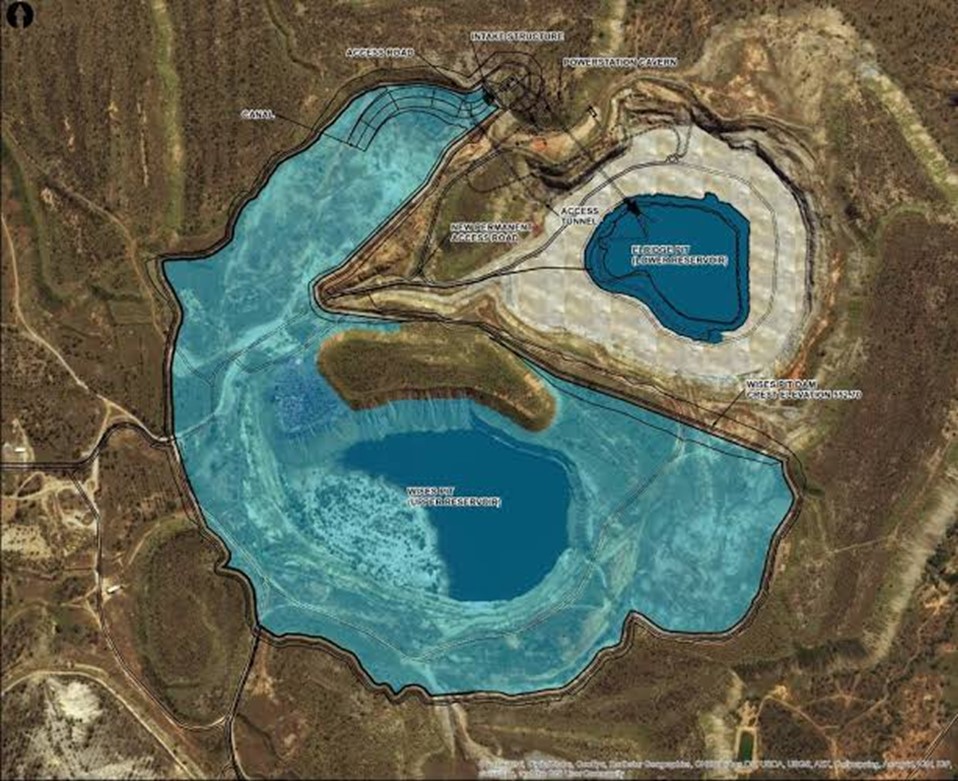
Kidston pumped-hydro reservoir layout diagram [Source: Genex Power]
- Muswellbrook generates 347 gigawatt-hours of electricity each year, powers 52,000 homes, avoids 7.6 million tonnes of emissions, and creates 200 jobs at the height of construction.
- Battery banks at Muswellbrook output 100 megawatts and hold 200 megawatt-hours of electricity to steady grid frequency during evening surges.
- Kidston supplies 250 megawatts of hydro electricity for up to eight hours, powers 143,000 homes, supports 400 to 530 jobs, and delivers $343 million in benefit for communities.
- Teams monitor water quality, soil stability, and wildlife numbers as reserves take hold alongside solar and storage operations.
Disclaimer: This article is provided for general informational purposes only and does not constitute professional, legal, financial, or engineering advice. Readers should independently verify all project specifications, regulatory approvals, and operational data directly with the relevant organisations before relying on this information.

Diana Alexandra is an experienced editor and content strategist with over a decade of expertise across publishing, digital media, and quality assurance. Holding an MA in English and specialised credentials in journalism and editorial practice, she transforms complex ideas and raw drafts into sharp, SEO-driven, and reader-focused copy that meets rigorous publication standards.