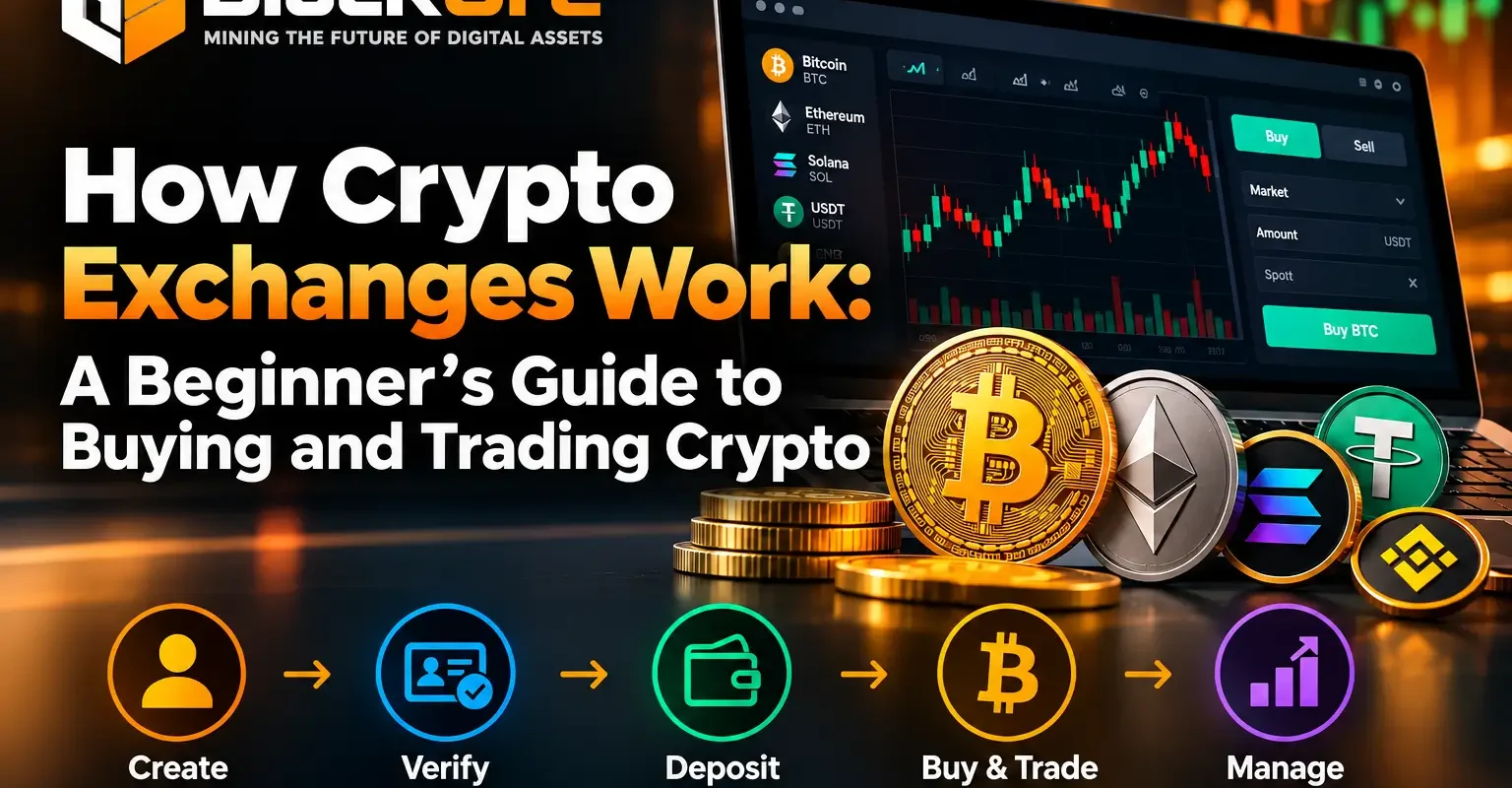
Crypto exchanges help beginners enter digital asset markets, compare prices and manage transactions. Understanding their fees, trading methods and risks can make buying cryptocurrency easier.
A crypto exchange is an online place where individuals trade cryptocurrency. The platform allows buyers to connect with sellers. Most exchanges provide live pricing. They also track all events in the transactions. In addition, most platforms provide more trading functions, although they may vary from one platform to another.
Some platforms provide funding in fiat currency. Some platforms give users the chance to stake their coins in exchange for rewards. In addition, some platforms have the option for timed buys. When new to trading, it is important to look at how the websites function and the fees applied. It is also important to take a look at the security measures applied.
Cryptocurrency rates change rapidly. That is why it is important to know some information about how they operate before depositing your funds.
How To Start Buying And Trading Crypto
There are a number of steps to get started. It is essential for beginners to know each step before investing any money in buying a cryptocurrency.
- Select an Exchange: Research the various cryptocurrencies that are supported, transaction fees, security measures and local support. Ensure that you can pay the provider using your preferred payment method.
- Create an Account: Sign up via the exchange’s official website or application. Some identity verification is needed on many centralised platforms as a regulatory requirement.
- Protect Your Account: Be sure to use a strong, unique password and set up two-factor authentication. Do not provide passwords, recovery codes or verification codes.
- Deposit Funds: It can support fiat currency or transfer of cryptocurrency from another wallet, depending on the platform.
- Place an Order: Choose the cryptocurrency, indicate the quantity of the order and the price and fees that are shown, and then confirm the order.
- Stay informed of holdings: Check transaction history and balances. At this time, if applicable, under certain conditions, transfer long-term positions to a compatible personal wallet.
Requirements for verification and payments differ from jurisdiction to jurisdiction. The exchange rules must be checked with the user prior to signing up. Also, they should know the withdrawal restrictions and the processing time prior to the withdrawal.
Before you begin trading, check out exchange fees, security of the account and payment options if you’re new to trading.

Crypto exchanges provide digital marketplaces for buying, selling and exchanging cryptocurrencies. [Navi]
Learning about Exchange Types and Trading Orders
There are two types of crypto exchanges. Understanding the differences will assist novices in choosing the platform that suits them.
- Centralised Exchanges (CEXs): These are operated by businesses and manage customers’ trading accounts. They generally can provide trading interfaces, customer support and account retrieval options. Users have to rely on the provider for security and dependability.
- Decentralised Exchanges (DEXs): These exchanges are typically based on smart contracts that connect compatible blockchain wallets directly to each other. The user usually has less control over their wallet and is responsible for doing any transactions and securing their wallet.
Trading orders also have an impact on the way that purchases are made. In general, a “market order” is an order to buy or sell a security at the current market rate. But the final price may vary with volatility in market conditions.
A limit order is an order that specifies the highest price a buyer is willing to pay for a security or the lowest price a seller is willing to take for a security. There is no guarantee of execution unless corresponding market conditions are present.
These are the order types that should be mastered first before looking into advanced options. Margin trading, derivatives and leveraged products are subject to potentially large losses. These tools might not be appropriate for novice traders.
Crypto Exchange Fees, Security And Risks
It is crucial to comprehend pricing and dangers when purchasing and transacting cryptocurrencies. There are various fee models and protection plans for different platforms.
- Trading Fees: Fees are levied on exchanges for exchanging, converting or selling cryptocurrencies. Some apply maker and taker pricing; others will show charges per transaction.
- Deposit and Withdrawal Costs: Deposits and withdrawals through bank transfer, card payment and cryptocurrencies may require different charges. Also, there may be blockchain network fees.
- Price volatility: Cryptocurrency prices can suddenly swing up or down. Investors could go into a loss in part or all of the invested capital.
- Platform Security: Encryption, cold storage, and other security measures might be implemented by exchanges. These measures minimise some risks but not all.
Legal requirements vary from country to country – Regulatory Considerations. It is the user’s responsibility to confirm local rules, tax liability and legal ability to accept users from the platform they have selected.
Beginners should check out the exchange’s reputation and terms before trading. The soft-spot platforms should be avoided as they offer a sure-thing return or push users to make immediate deposits. Piggyback offers and possible impersonations are other red flags.
Learn the official exchange information, such as Coinbase Learn, to develop basic knowledge. Use reliable information to make financial choices. Play safe, know what you are doing when it comes to the money and never put money where your mouth can’t reach.
Frequently Asked Questions
Q1: What is the difference between a centralised and a decentralised crypto exchange?
A1: You can trade from your wallet on a decentralised exchange, or from a centralised exchange that verifies your identity and holds your assets. The initial step for most beginners is the 1 centralised platform, as it is the easiest to get started with.
Q2: What is the maximum amount of crypto that I can purchase at a time?
A2: People can purchase a portion of a coin: One Bitcoin is equal to 100 million satoshis. Minimum order sizes are different; please check your exchange before placing deposits.
Q3: What is the number of security layers?
A3: Use 3: One password, 2FA and an offline copy of your recovery phrase. They work together to greatly limit the possibility of unauthorised access.
Q4: What is the best time to sell cryptocurrencies?
A4: Crypto markets are always open – every day, 24 hours a day, including on weekends and public holidays. Consider using limit orders and price alerts, since prices may change anytime.
Disclaimer
This explains, in a broad way, how crypto trading platforms work. It is only meant to share general information. It is not money advice. It is not help with taxes. It is not legal advice. Crypto trading can be dangerous. You might lose money. You might even lose everything. What a platform offers, plus the fees and rules, can shift by location. Some places follow different standards. If you plan to make a decision with your money, do your own homework. Confirm the site is real and trustworthy. If you are unsure, ask a licensed expert.

Diana Alexandra is an experienced editor and content strategist with over a decade of expertise across publishing, digital media, and quality assurance. Holding an MA in English and specialised credentials in journalism and editorial practice, she transforms complex ideas and raw drafts into sharp, SEO-driven, and reader-focused copy that meets rigorous publication standards.